Routes that keep improving, week after week.
Operators collect and transport waste, recycling and organic materials from homes and businesses to processing or disposal facilities.
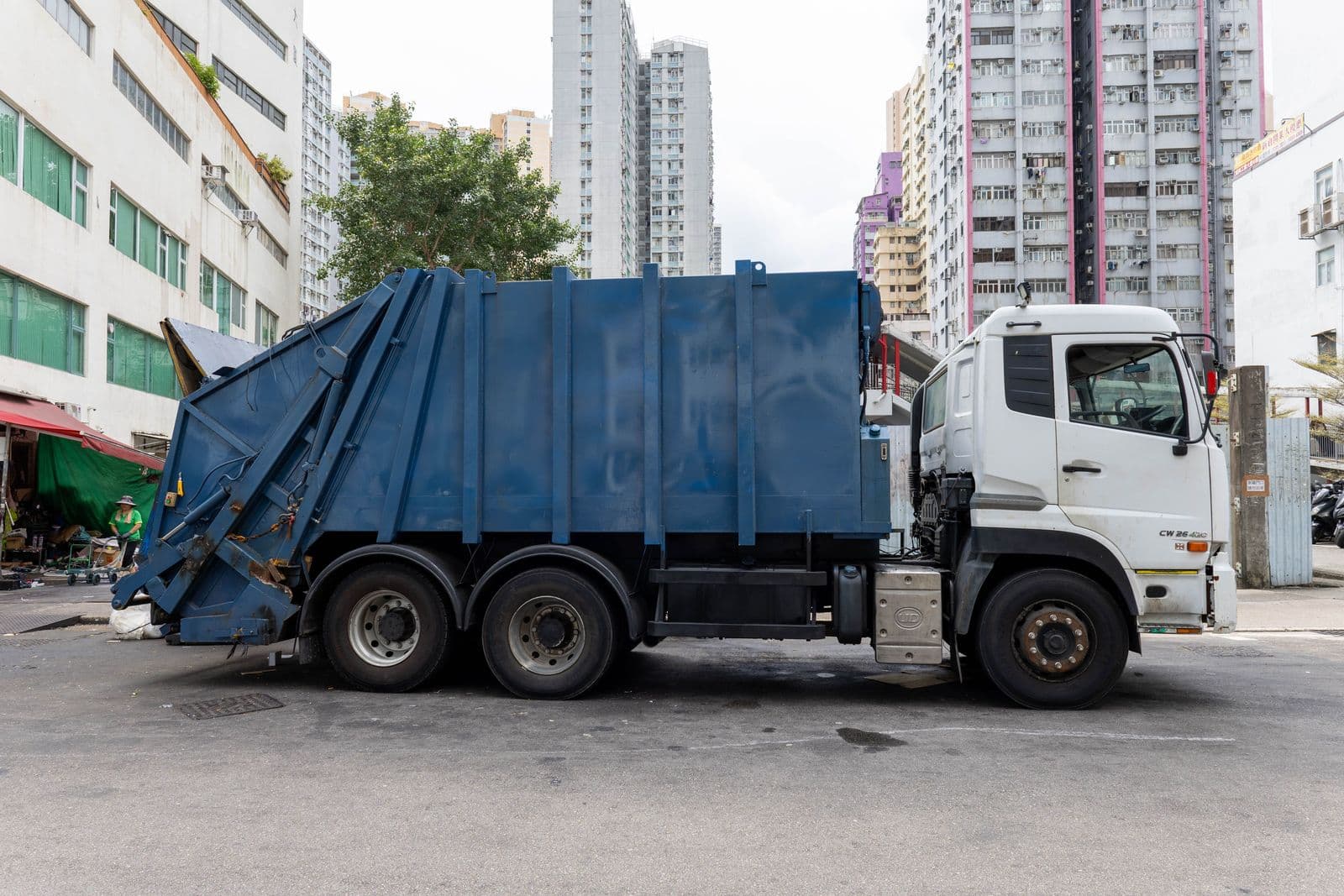
The same streets, every week, for years.
Operators must coordinate efficient routes across large service areas while managing heavy vehicle wear, shifting municipal regulations, and accommodating new stops and service changes without disrupting existing customer service.

01 / 05Optimisation
Constantly optimized routes that run their best.
Operators can continually fine-tune fixed, recurring routes for efficiency, letting small savings compound across hundreds of stops. Fuel costs and labour hours improve from a route that keeps improving, week after week.
- Fixed routes, continually tuned
- Operators can continually fine-tune fixed, recurring routes for efficiency rather than accepting the sequence they were first drawn with.
- Small savings, compounded
- Letting small savings compound across hundreds of stops is what turns a few minutes into fuel costs and labour hours you can actually see.
- New stops absorbed, not bolted on
- A new customer or a service change is placed into the existing route, so growth does not disrupt the service the street already expects.
No single week's saving is worth a meeting.
That is exactly why fixed routes are worth tuning. The gain per run is small enough to ignore and repeats often enough to matter more than almost anything else in the operation.
20 min
Off a single run
On its own, unremarkable — about the length of one traffic light sequence and a tight turn avoided.
9 h
Across a year
The same minutes, on the same route, repeated every week. This is where the fuel and the labour hours actually come back.
× fleet
Every route you run
One route is a rounding error. Every recurring route in the service area, improving quietly week on week, is the operating margin.
Illustrative — gains depend on route geography, stop density and service rules
Each route and every stop is repeatable service you can prove.
Every stop is automatically confirmed, creating a clear record of completed service rather than just a completed cargo run. Operators can show exactly which stops were serviced and which routes were completed.
- Stop-level confirmation
- Every stop is automatically confirmed, creating a clear record of completed service rather than just a completed cargo run.
- Which stops, which routes
- Operators can show exactly which stops were serviced and which routes were completed, without reconstructing the day from memory.
- The missed collection
- A stop that was not serviced reads as a specific fact with a time against it, which is the difference between resolving a complaint and absorbing it.
- Recurring service as a series
- A weekly collection is managed as an ongoing arrangement rather than rebuilt each week, so a holiday or a suspension does not break the pattern.
- Heavy-vehicle wear
- Mileage and engine data accrue against the vehicle that did the work, so maintenance follows real use rather than a flat schedule.
- Evidence on request
- The record is already assembled when a resident, a council officer or a contract review asks for it.
Reliability municipalities can verify, not just trust.
Consistent, provable route completion gives municipalities documented evidence of service delivery. That record becomes the foundation for winning and retaining contracts.
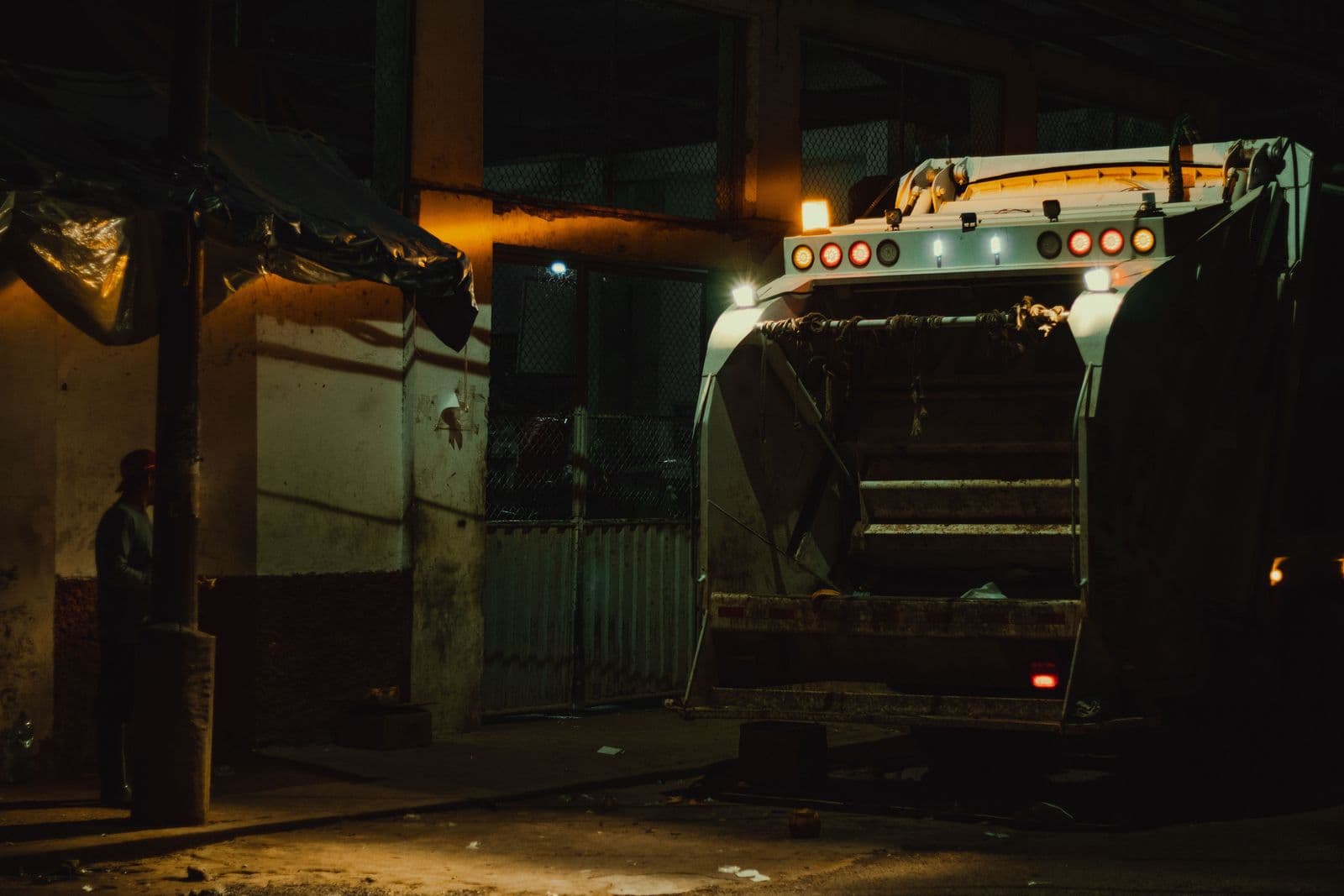
Nobody notices the collection that happened.
This is a service judged almost entirely on its exceptions. A route that ran exactly as it always does generates no calls at all — which is why the record of it running is worth as much as the run.
What sanitation operators ask first.
The Help Center goes further on each of these, with the screens they happen on.
Yes — that is the intended use. The route persists as an arrangement and is tuned against how it actually ran, so improvements accumulate instead of resetting each time somebody rebuilds it by hand.
Read the full articleIt is placed into the existing sequence rather than appended to the end of it, so the addition costs the route the few minutes it genuinely costs and nothing more.
Read the full articleEach stop carries its own confirmation, so service is provable at the address rather than only at the level of 'the route ran'. That is the record a disputed collection is settled from.
Read the full articleConsistent, provable route completion gives municipalities documented evidence of service delivery, drawn from the same records the routes were run on rather than compiled separately.
Read the full articleOther markets Naveera runs
Passenger & medical
Freight & field operations
Prove the route. Keep the contract.
See one of your recurring routes tuned against how it actually ran last month.