Vision that understands the road — and the driver.
Naveera Computer Vision combines driver monitoring, road-facing driver assistance and camera intelligence in one system — verifying who's driving, watching the road ahead, and turning what the camera sees into events your fleet can act on.
This is what the camera sees.
Ten seconds of road-facing footage off a Monarch device, in the conditions it runs in — uncut, apart from the telemetry bar the camera burns into every frame.
Know who's driving, and when attention leaves the road.
Monarch's driver-facing lens reads attention, fatigue and basic safety-compliance signals inside the cabin, and ties every trip and every event to the right person. Configurable per fleet, and not a guarantee against every incident.
- Attention & fatigue
- Drowsiness, eyes-off-road and gaze/head-pose signals read continuously from the driver-facing lens, surfaced as events rather than as a running score.
- Distraction
- Phone use and other distraction indicators, detected on-device at the moment they happen, so the clip around them is what gets reviewed.
- Safety compliance
- Seatbelt state, driver presence, and smoking where the configuration supports it. Which of these are enabled is a per-fleet decision, not a default.
- Camera integrity
- Obstruction and occlusion detection, so a lens that has been covered or knocked out of alignment is a reported condition instead of a quiet gap in coverage.
- Driver verification
- Confirming the expected driver is behind the wheel, recognising authorised drivers, and flagging an unexpected change of driver mid-shift.
- Event attribution
- Associating every trip and every safety event with the right person, so driver-level analytics rest on something better than the roster.
Identity and biometric-matching features are deployed according to each customer's own policies, consent requirements and applicable regulations — Naveera does not set that policy on a fleet's behalf.
Understand what the vehicle sees.
The road-facing lens reads the scene ahead continuously — lane position, the vehicles in front, and what the road itself is doing. These are four of the scenes it recorded.
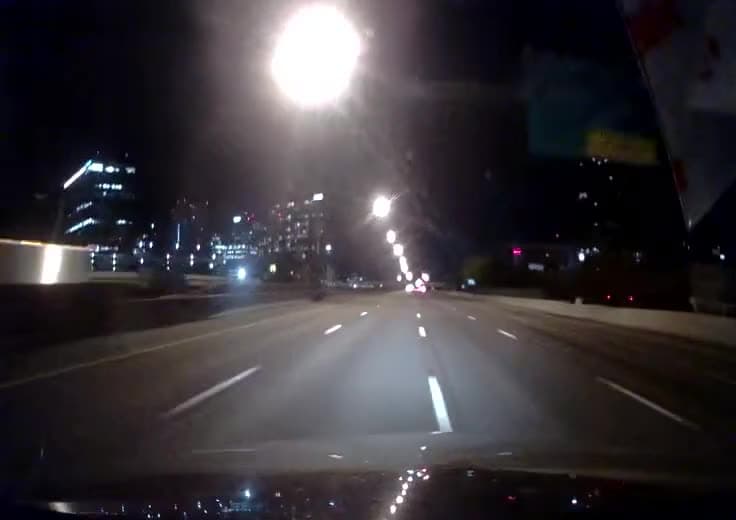
Night, rain, glare, fog.
The hours that produce the most risk are the ones a reviewer is least able to reconstruct afterwards from a driver's account. On-device perception runs in the same conditions the driver does, and records what it saw while it was happening.
From camera signal to operational action.
Every detected event follows the same path, from the camera to the people who need to see it. Because the road-facing and driver-facing lenses are one device on one clock, an event arrives carrying what was happening outside the vehicle and inside it at the same moment — not just a timestamp.
Camera
Event detection
Driver & vehicle
Operations dashboard
Review & action
Camera
Event detection
Driver & vehicle
Operations dashboard
Review & action
Detection to evidence, in one place.
An operator can move from a detected event straight to the moment it happened — no separate system, no manual lookup.
From single events to fleet intelligence.
Individual detections roll up into patterns a safety team can act on — which drivers, which routes, which risks recur.
The unit of review stays the event, with its own footage attached. A pattern is what a reviewer assembles from those events over time — not a score the system hands down, and never one incident standing in for the whole picture.
One camera, engineered for both directions.

Monarch pairs a driver-facing lens with a road-facing lens in a single housing, with multi-camera configurations and fleet-wide connectivity built in.
- Driver-facing lens for cabin monitoring
- Road-facing lens for ADAS and event capture
- Fleet-wide connectivity, built for multi-camera setups
The questions that come before the cameras do.
Camera programs fail on policy and trust far more often than on detection quality. These are the answers we give before anything is installed.
Camera behaviour is configured per fleet rather than fixed by us. What the system is built around is event capture — the clip surrounding a detected event is what gets retained and reviewed, rather than an unbounded archive of a driver's whole shift.
Read the full articleAccess follows the same role model as the rest of the platform, so camera events and their clips are visible to the roles you grant them to and not to everyone with a login. Every review is attributable to the person who performed it.
Read the full articleNo. Detections are surfaced for a person to review, in context and alongside the footage they came from. Naveera does not score, discipline or act on a driver automatically, and one detection is deliberately not presented as a verdict.
Read the full articleDetection runs on the device rather than in the cloud, so events continue to be identified and recorded out of coverage. Delivery of the event and its clip to the dashboard catches up once the vehicle has a connection again.
Read the full articleYes — the capability set is configurable per fleet, and identity and biometric-matching features in particular are deployed according to your own policies, consent requirements and applicable regulations rather than switched on by default.
Read the full articleThe rest of the platform
See what your cameras could already be telling you.
Talk to us about DMS, ADAS and driver identity for your fleet.