ADA isn’t a guideline. It’s the standard we build to.
Paratransit provides door-to-door transportation for disabled individuals who cannot use standard public transit, typically augmenting public bus and rail systems under ADA requirements.
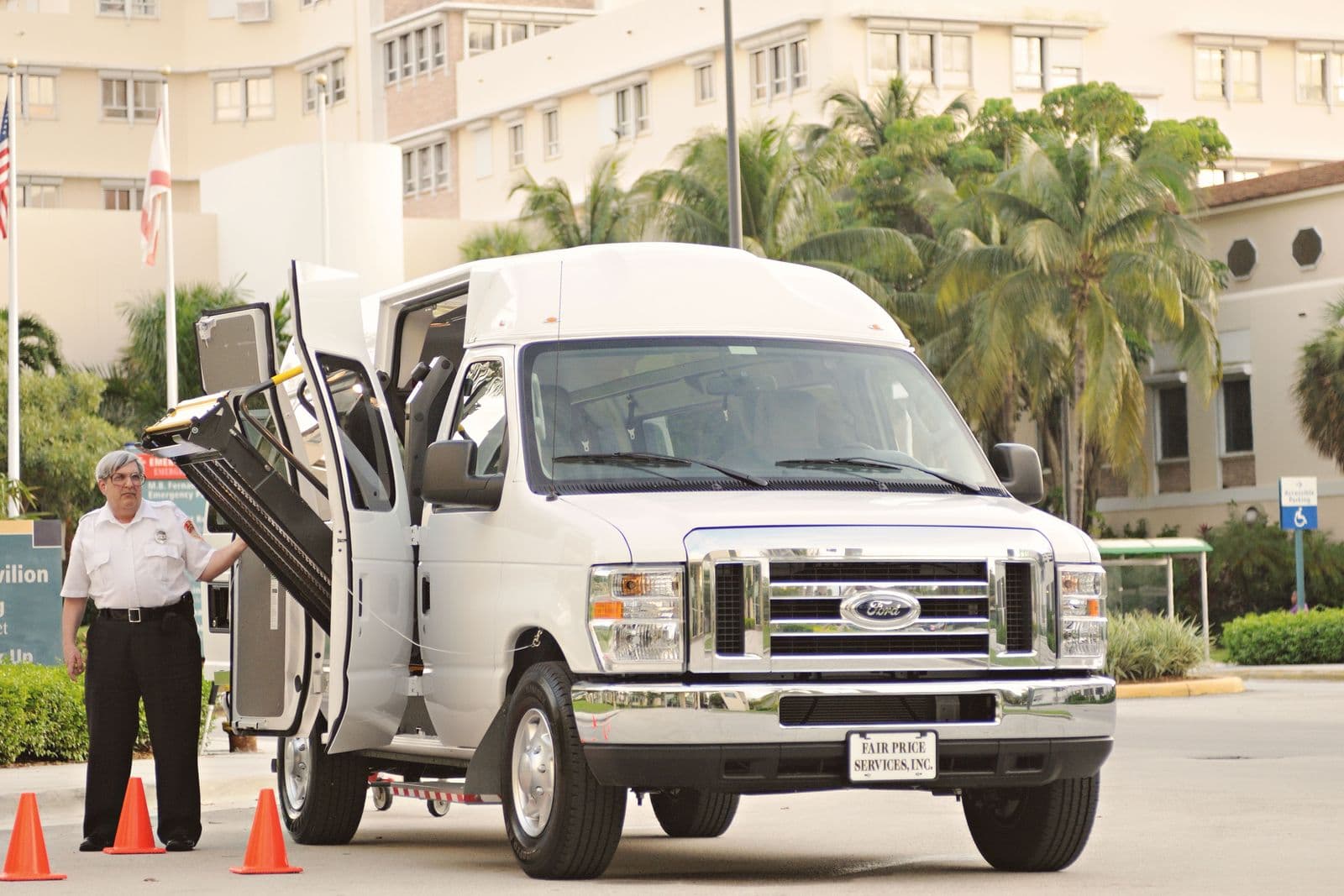
On demand, for every kind of need, to a published standard.
Providers must coordinate flexible, on-demand scheduling for riders with a wide range of needs, while meeting strict service standards and reporting requirements set by transit authorities and regulatory agencies.
ADA isn't a guideline here. It's the standard we build to.
Federal law sets firm goals for on-time performance and trip denials, and falling short carries real consequences. Our platform is built around those requirements from the ground up, not adapted to them after the fact, so meeting the standard is simply how the system operates every day.

02 / 05Scheduling
Automated scheduling. Pinpoint accuracy. Zero guesswork.
Next-day booking and service area rules leave little room for error, and manual scheduling makes that room even narrower. Automated scheduling handles these constraints precisely, giving dispatchers confidence in every assignment.
- Next-day booking, handled precisely
- Next-day booking and service area rules leave little room for error, and manual scheduling makes that room narrower still.
- Constraints applied consistently
- Automated scheduling handles service area boundaries and rider requirements the same way on a quiet Tuesday as on the morning everything arrives at once.
- Confidence in every assignment
- Dispatchers spend their attention on the trips that genuinely need a judgement call, rather than re-checking the ones that do not.
On time means inside the window.
Almost every argument about paratransit performance is really an argument about this interval — what it is, when it started, and whether the vehicle was in it.
Before 09:40
The vehicle is early. It waits — a rider who is not ready yet has not failed to show, and a driver who leaves at 09:38 has created a no-show that never had to happen.
09:40 – 10:10
On time. Anywhere inside the window counts, which is why the window — not the negotiated time — is what the schedule is actually built to protect.
After 10:10
Late, and countable. It lands in the on-time performance figure the agency reports, and it lands on a rider who has been outside for half an hour.
Illustrative — window length is set by each agency’s own policy
Every trip, documented. Every requirement, met.
Trip events are captured automatically from pickup to drop-off, creating a complete account without extra effort from you. When a board, an FTA auditor or a public records request calls for proof, the documentation is already there — and a transparent, immediate response is key to building and keeping your professional reputation.
- Trip events
- Captured automatically from pickup to drop-off, creating a complete account without extra effort from your team.
- Eligibility records
- A rider's eligibility travels with them, so what they are entitled to book is on the record rather than in a reservationist's memory.
- Reservations
- What was requested and what was agreed, held against the trip that came out of the conversation.
- Subscription service
- Standing trips managed as a series, suspended for a hospital stay or a holiday without being rebuilt afterwards.
- Vehicle & mobility matching
- Lifts, ramps, securement positions and ambulatory seats treated as capacity that either exists on a run or does not.
- On-time performance
- Performance computed from the same records the trips were run on, ready for the board or the agency that asks for it.

The day starts a long time before the first rider does.
Runs are built, vehicles are checked and the board is set while it is still dark. By the time the first window opens, the question is no longer what the plan is — it is whether the plan survives contact with the morning.
What schedulers ask first.
The Help Center goes further on each of these, with the screens they happen on.
Yes, and they are planned together rather than in separate passes. Subscription trips form the backbone of the day and same-day requests are placed into what is genuinely left, which is the only way the second group gets an honest answer.
Read the full articleThey stay visible as unassigned with the reason they could not be placed, rather than disappearing quietly. A trip that needs a securement position on a run with none left is a capacity fact, and it should read as one.
Read the full articleEvery agency answers that slightly differently, so Naveera records the facts underneath it — when the vehicle arrived, how long it waited, when it left — and lets your policy be applied to a record rather than to a recollection.
Read the full articleYes. Delay is visible as it accumulates across a run rather than at the point a window has already been missed, which is the difference between moving one trip and apologising for four.
Read the full articleOther markets Naveera runs
Passenger & medical
Freight & field operations
Hold the window. Serve the trip.
See what your own subscription base and same-day demand look like planned together.